
 Somewhere in Masaka, an elderly grandmother takes care of 13 grandchildren. A dilapidated house left by her long-deceased husband is the only possession to speak of. She can hardly afford their food, education or healthcare. To make ends meet, she sends the grandchildren out to work in people’s gardens and bring home some money. Members of the community threatened to arrest her, accusing her of withholding children from school and involving them in child labour. No one could see her plight! How does an ailing grandma deal with 13 orphaned grandchildren?
These are some of the realities that came to the fore during the Annual National Social Protection Dialogue, organised by the Ministry of Gender, Labour and Social Development, in October. Stakeholders discussed ways of making comprehensive and inclusive social protection a reality, breaking the cycle of poverty and insecurity experienced by families like the one in Masaka.
Social protection refers to public and private interventions that reduce the risks and vulnerabilities that expose individuals to income insecurity and social deprivation, helping them to live dignified lives. Uganda Vision2040 envisions a system including universal pensions for older persons, public works schemes for the vulnerable and unemployed and social assistance for children, persons with disabilities and the destitute.
Often, the mention of social security conjures images of older people, possibly retirees queuing up for pensions or SAGE handouts. This maybe because, all factors held constant, old age is the final stage for everyone – no matter the type or magnitude of their vulnerability. As people go through life from childhood through youth and adulthood, they are steadily moving towards old age and retirement.
While the ideal retirement is characterised by financial freedom, good health, comfortable living and all life’s fine things, it should be the culmination of a journey and a context that’s shaped right from birth. This is where the lifecycle approach to social security comes in. However, given the realities in Uganda, is it possible to achieve social protection from a lifecycle point of view? What are the key enablers and impediments that define the journey from early childhood to old age? Can the orphaned grandchildren in Masaka dream of a smooth journey to retirement?
At the social protection dialogue, keynote speaker Dr Fred Muhumuza raised key factors and issues affecting the social protection agenda in Uganda. He observed that in Uganda, 56% of the population is below age 16. Older persons over 60 are 2.3 million, accounting for 5% of the national population. According to the national social protection strategy, 45% of older persons live in poverty; only 2% can access any form of credit. This is compounded by low social security, where only 2.3% of older persons get a pension. Despite that level of poverty and vulnerability, older persons often assume the responsibility of looking after the young ones below 16 – just like that grandma in Masaka.
Even as they go through the different stages of life, most Ugandans live in rural areas, with multi-dimensional poverty, and limited access to social services. There are 23.5 million people in the working age population, with only 34% of them in formal employment. The rest are independent workers dabbling in agriculture, unpaid care work or in jobs that cannot offer a decent income. The youth form 22.7% of the total population, yet they face a very high unemployment rate which stands at 17%, according to the Annual Labour Force Survey.
Most Ugandans live with the effects of these conditions until old age. Unemployment, underemployment, meagre incomes, job insecurity, occupational accidents, gender-based violence, psychosocial challenges – they all affect the quality of life in retirement and old age. Even people who are employed live with the constant worry of what will happen when they reach retirement age – “What shall I do when I reach 60?” they muse. As such, many refuse to vacate office even when they reach retirement age. Even if they had a guaranteed retirement income, they would still be constrained by family responsibilities, limited access to services and the onset of age-related bodily complications and diseases like diabetes, high blood pressure, dementia, and visual impairment among many others.
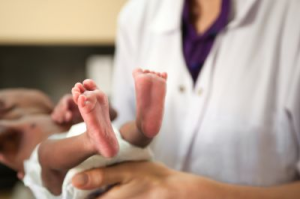
All these realities point to the need for a comprehensive approach to social protection to cover all people across the life cycle. The life cycle approach requires that from the onset, factors must be right for people to be productive. The keynote speaker, Dr Muhumuza argued that the life and health of children must be secured right from the start – including the nine months in their mothers’ wombs. “Pregnant women must be tracked, to ensure they get healthy children, who are the future of Uganda. If the country has healthy, productive people right from an early age, then old-age vulnerability will be significantly reduced,” he said.
The panelists at the dialogue re-echoed the call for a comprehensive, lifecycle approach which addresses the multiple dimensions of social security. Allan Munaabi, Strategy Services Manager at NSSF, argued that social protection should be a human right and that everyone across the country should have access to social security over their life cycle. Francis Muhumuza, a Principal Economist in the Ministry of Finance noted that as Uganda moves towards the middle-income economy, young ones should be relieved of the burden of looking after their elderly parents by ensuring that people at all stages of life are covered. Eric Kakoole, Assistant Commissioner for Policy in the Ministry of Education and Sports said that social protection should be approached from the education angle, observing that the uneducated are the ones most likely to be excluded from social protection. “Education is the greatest cornerstone for social protection,” Kakoole argued.
URBRA lays emphasis on early planning and saving for retirement to alleviate old age poverty. With a life cycle approach many of the old-age challenges could be arrested early enough for example, if one maintains a healthy and active lifestyle when they are younger, they may avoid some old age ailments; if one starts saving early enough they can attain financial independence in old age; if one builds a home during their most productive years, they will not lack a place of abode in old age; if one invests in meaningful relationships they will maintain social networks in retirement. But all of these depend on realities and experiences that shape one’s journey – what foundation do they get in infancy and childhood; how do they navigate the challenges of youth such as unemployment and under employment; how do they prepare for retirement during their most productive ages of 18-59?
Government and non-government actors must all be involved in efforts to make social protection a reality. Social security is not charity; it is a right, a social contract and a shared responsibility. Particularly for older persons, pensions and retirement benefits are a mechanism through which a society takes collective responsibility for its elders, transforming the economic challenge of aging into a source of stability and growth and protection against the loss of income and contingencies of old age. There is no better way to demonstrate this commitment than to adopt a life-cycle approach which addresses and tracks an individual’s wellbeing from birth to death.
-ENDS –