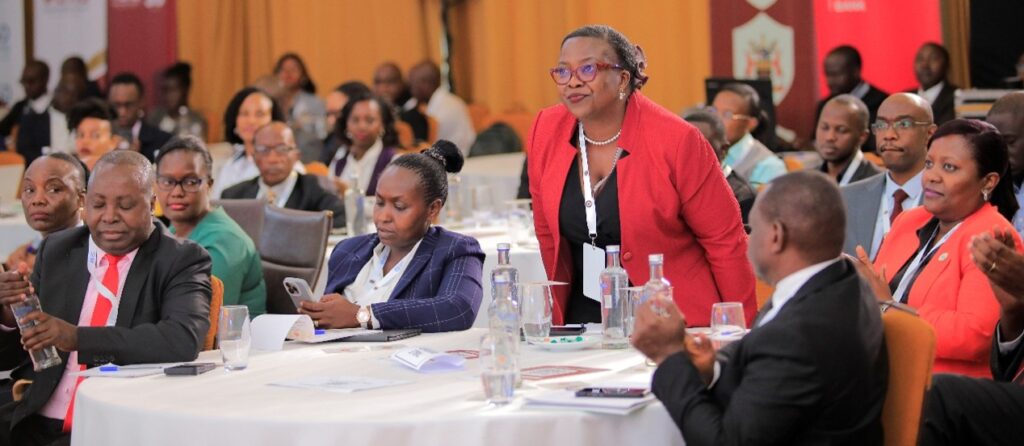
On Friday 30th October, Uganda joined the rest of the world to commemorate World Savings Day. The commemoration, held at Speke Resort Munyonyo, coincided with the launch of the third National Financial Literacy Strategy (2026-2031) and the key message was: without the knowledge, skills, and confidence to use money wisely, Uganda’s impressive gains in financial inclusion will come to naught.
Speaker after speaker at the event emphasized that financial literacy is the critical ingredient that transforms access into meaningful financial health, resilience, and prosperity.
“Money Is Only as Powerful as the Person Who Holds It”
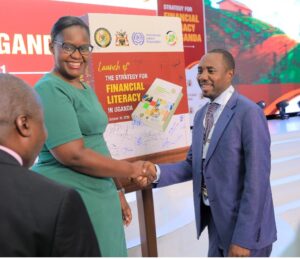
Delivering the keynote address on behalf of the Minister of Finance, Planning and Economic Development, Ms Sandra Nakabiri, a Senior Economist and Financial Inclusion Advocate, captured the essence of the strategy saying, “the strategy rests on one simple idea: Money is only as powerful as the person who holds it.”
She illustrated this with a comparison of two characters: “Consider two Ugandans who earn the same income. They live in the same village, and both use mobile money. One saves part of his income and builds a reserve that protects his family against risks. The other does not save and is one emergency away from losing everything.”
“What separates the two individuals is not lack and not access; it is knowledge, skills, and confidence in handling money, and that is financial literacy.”
Unfortunately, a bigger part of the Ugandan population of Uganda is not financially literate. “According to the Bank of Uganda financial capability survey, only 50% of Ugandans are financially literate, and nearly half of adults could not even answer four basic questions on money correctly,” Ms Nakabiri revealed.
She however noted that financial literacy has been the quiet story underlying the improvement in financial inclusion in the country. She said that over the years, Uganda has witnessed steady improvement in financial inclusion – a process which started with stabilising the shilling in the 1980s, increase in access with the growth of banks and microfinance institutions, and now greater capability on the part of the Ugandans. “Now we are talking of capability; it is what Ugandans do with the access we have given them. Yes, we report that access is at 81%, but access cannot be a complete story without financial literacy.”
Access Without Usage
Giving a broad overview of the third financial literacy strategy, Andrew Kawere, Director National Payment Systems Department at Bank of Uganda questioned whether expanded access to financial services had translated into real improvement in people’s lives.
“The jury is still out on what that access means when it comes to the actual day-to-day life of the ordinary Ugandan,” he said. “Yes, we have access, but why don’t we have as much usage? Yes, we have digital channels that are being very popular, but why is it that it is not for everybody?”
Mr Kawere quoted the 2023 Finscope survey saying, “nine out of ten Ugandans experienced unexpected financial setbacks in 2023, and most of them lacked sufficient income to meet their expenses. However, only two in ten adults set long-term financial goals and worked towards achieving them. And only 1% had access to or used a pension retirement scheme.”
He drew a direct connection between planning and resilience: “If you don’t plan, you will be caught off guard. He emphasized the strategy’s goal: “The communities, the public, the citizens must be empowered with practical knowledge and skills, as well as the confidence to use these financial services safely and effectively.”
Financial Literacy as a Social Justice Issue
From a different perspective, Caroline Mugala, the International Labour Organization’s Country Director, framed financial literacy as a matter of dignity and social justice.
“For ILO, financial literacy is not merely a financial sector issue. It’s an issue of decent work and social justice,” she stated.
She illustrated her point with a relatable scenario: “Imagine a woman, who is a member of a village savings group. She has mastered the discipline of saving. But when she wants to get a loan and expand her business, new questions arise: Which loan can she afford? What interest would she pay? How does she separate business income from household expenses? She knows how to save because she does that on a weekly basis. What she needs now is the knowledge to make her savings work smarter for her – and that’s financial literacy”
Mugala emphasized that financial literacy had real consequences: “Can a worker manage household expenses and prepare for emergency? Can a young entrepreneur distinguish between a loan that will grow a business and the one that can undermine it? Can someone develop a retirement plan for financial security? These are questions about dignity, opportunity and resilience.”
She called for financial education that meets people where they are saying, “financial education must reach people where they live and work, and not only where financial institutions operate. It must be practical and relevant to the decisions about saving, borrowing, insurance, investment and retirement.”
“Financial inclusion must mean more than bringing people into the financial system. It must make the system work for them,” Mugala emphasised.
Meeting Customers on Their Journey
Zerubbabel Kwebiiha, Chief Executive Officer of FSD Uganda, brought a practitioner’s perspective, challenging financial institutions to rethink how they engage with customers.
“Every customer needs a different tactic along their journey. Not everything is going to speak to every one of them,” he emphasized. “We need to understand who our customers are.”
Kwebiiha further called for more meaningful measurement of success: “We have educated these people but what are the outcomes of all the campaigns? How do we measure the financial health of the people? How do we measure the actual transformation of their lives?”
He noted that with 81% financial inclusion, the challenge is no longer reaching people but teaching them the right things: “The reason they are not using the products is because you’re telling them the wrong thing. There is something we need to change.”
Financial Health: The Ultimate Goal
Deputy Governor Professor Augustus Niwagaba challenged Ugandans to move beyond financial inclusion to what he called “financial health.” He defined financial health as “the state of your monetary affairs” and didn’t mince words about the disconnect between asset ownership and financial discipline: “A bone to pick with Ugandans: most are balance-sheet rich but they are always going to money lenders.”
He emphasized the importance of budgeting: “Even when you go to the supermarket you need a shopping list. You must plan. This is what we mean by financial health.”
Prof Nuwagaba urged Ugandans to be independent and disciplined: “The food to sustain you on a journey is better prepared by you; borrowed water does not clean hands thoroughly. Be independent! Take destiny in your hands.”