
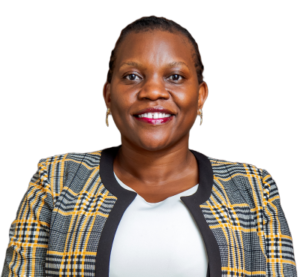
Financial inclusion is not just about opening accounts. It is about building savings habits for lasting growth. This was the key message from the annual financial inclusion forum organized by the Bank of Uganda at the Four Points Hotel in Kampala, where stakeholders converged to assess progress and chart the way forward regarding the national financial inclusion strategy.
The forum, attended by government officials, financial sector players, telecoms, microfinance institutions, and development partners, observed that while Uganda has made significant strides, with financial inclusion now at 81%, the real challenge lies in ensuring that access translates into meaningful usage and measurable impact on households and businesses.
“Access without literacy is fragile,” said Mr. Musa Lukwago, representing the Permanent Secretary and Secretary to the Treasury. “Having created access, we must now ensure what lies within is valuable, secure, widely adopted, and essential to everyone for everyday use.”
The symposium identified five key priorities that stakeholders must address to make financial inclusion a reality for all Ugandans, regardless of gender, age, ability, or background.
From mere access to active use
Firstly, financial access must be turned into active use and measurable impact. Speakers emphasized that having a bank account or mobile wallet is not the same as being financially included.
“In the last many years, what we’ve been able to do as an industry is to make it easy to move money across the country within microseconds – between wallets, for businesses, for individuals. But financial inclusion is more than that,” said Japhet Aritho, Managing Director of Airtel Money. He shared examples of how financial inclusion transforms lives – witness dairy farmers who take up insurance to mitigate the economic impact of losing a cow, and boda-boda riders who access a loan via mobile money to fuel their motorcycles and ensure business continuity.
Finance productive enterprises
Secondly there was a call to direct financing towards productive enterprises and stronger livelihoods. Government has committed over 11 trillion shillings to wealth creation programs, including the Parish Development Model, Emyooga, Operation Wealth Creation, the Small Business Fund, and the GROW initiative for women enterprises.
However, speakers noted that capital alone does not build a business. “A loan that is repaid on time, a SACCO that is summed with bound books, a group that saves as it learns all come from financial knowledge and integrity,” said Musa Lukwago, representing the Permanent Secretary, Ministry of Finance. He urged Ugandans to take advantage of those government initiatives and use them for productive purposes to increase household income.
Making financial literacy practical
The third priority is to make financial literacy practical, continuous, and relevant. Speakers stressed that financial literacy must be delivered in a language that ordinary people understand. Airtel Money MD, Mr Aritho shared the example of his 93-year-old mother, who never went to school but taught him the essence of financial literacy: “Anything that is putting money into your pocket is an asset. But anything that is taking money out of your pocket is a liability,” he quoted his mother’s teachings.
“We need to speak in that language that my mother used to communicate to me,” he said. “Our challenge is how do we talk to people who are not in this room in a language that they understand financial literacy.”
Shafi Nambobi, CEO of UGAFODE, emphasized that financial literacy must start with staff. “It’s very critical that every customer we serve goes through financial literacy. But before we go to the customers, what about our staff? Do we include them in the financial literacy planning programs?” he quipped.
Strengthening trust through consumer protection
Stakeholders must also strengthen trust through consumer protection and safer innovation. As digital financial services expand, consumers face growing threats from fraud, overborrowing, and cyber security risks.
“Financial inclusion cannot thrive in an environment where consumers feel unsafe, uninformed, or unprotected,” Mr. Lukwago said. “We must therefore strengthen our efforts to enhance consumer protection, data privacy, and transparency within financial systems.”
Collaborating and partnerships
Additionally, stakeholders must collaborate on infrastructure, data, and delivery partnerships. Speakers highlighted the enormous potential of partnering with telecoms, which have over 30 million active users compared to the financial sector’s 4 million.
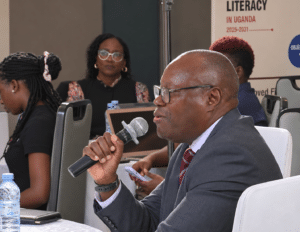
Martin Nsubuga, URBRA CEO noted that pension savings have grown from 4 trillion to nearly 40 trillion shillings in less than 15 years, but that money is owned by fewer than 4 million people. “That speaks to the inclusion need,” he said. “How are we impacting their lives?”
The government is also establishing the National Payment Street to enable real-time payments and promote interoperability across financial intermediaries. Digital platforms like Wendi Wallet and FlexPay are already extending services to the last mile – for example, over 2.5 million PDM beneficiaries receive funds through digital channels.
A Call for Collective Action
Speakers called for collective action to ensure that every Ugandan can thrive in the financial system. “Let us continue building a financial ecosystem where every planner, regardless of gender, age, ability, or background, has the opportunity to thrive and contribute to our national future,” Mr. Lukwago said.
#ENDS